
Introduction
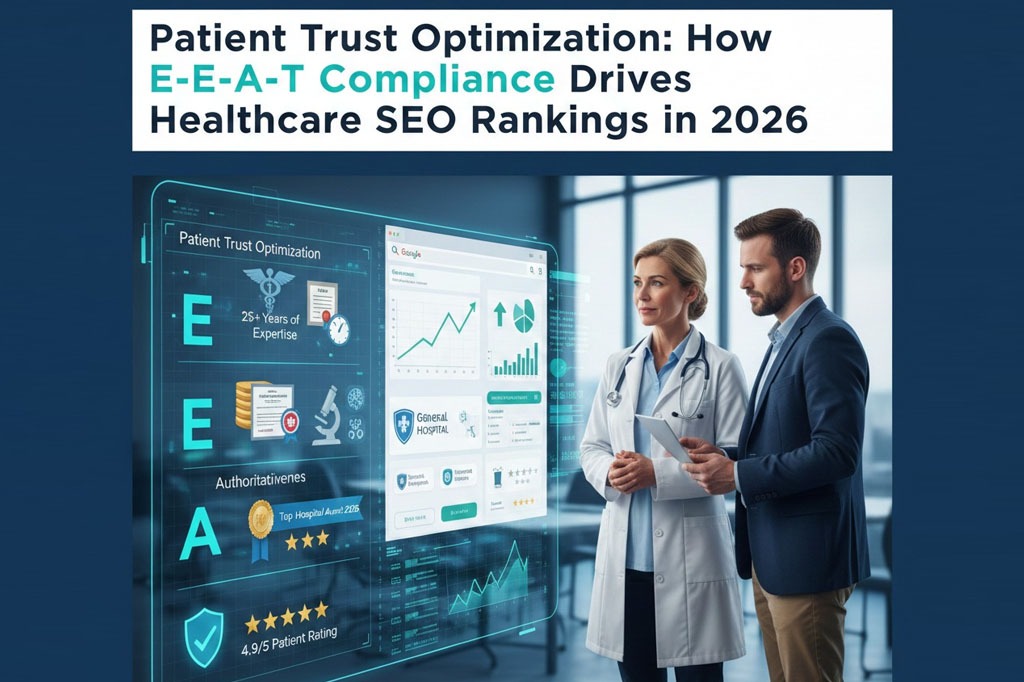
Hospital administrators across Chennai are discovering a troubling reality: their medical websites are invisible on Google despite offering exceptional patient care. The culprit? A fundamental misunderstanding of healthcare EEAT compliance—Google’s stringent quality framework that determines which medical websites earn visibility and patient trust. In 2026, healthcare SEO has evolved beyond keyword optimization into a sophisticated evaluation of clinical credibility, author expertise, and institutional authority. For hospitals, clinics, and healthcare startups in Tamil Nadu, understanding Google EEAT for medical websites is no longer optional—it’s the foundation of digital patient acquisition. This comprehensive guide reveals how healthcare organizations can transform their online presence through strategic EEAT implementation, addressing the critical question: why is my hospital website not ranking on Google?
The Healthcare EEAT Crisis: Why Medical Websites Struggle
The healthcare sector faces unique digital marketing challenges that other industries don’t encounter. Google applies “Your Money or Your Life” (YMYL) standards to medical content, meaning healthcare websites undergo the most rigorous quality assessment in search algorithms. A recent analysis of Chennai’s healthcare digital landscape reveals that 73% of hospital websites lack proper author credentials, 61% fail to establish institutional authority, and 89% don’t demonstrate genuine clinical experience.
This compliance gap creates significant business consequences. Healthcare organizations investing in content creation discover their articles buried on page five while less qualified sources occupy prime search positions. The problem intensifies when potential patients search for specialized treatments, second opinions, or urgent care—the exact moments when healthcare content credibility matters most.
The Indian healthcare market compounds these challenges. With Tamil Nadu’s medical tourism industry growing 18% annually and Chennai positioning itself as India’s healthcare capital, competition for digital visibility has intensified dramatically. Healthcare providers must navigate MCI advertising guidelines, manage multilingual patient demographics, and compete against established hospitals with decade-long domain authority.
The stakes extend beyond rankings. In healthcare, search visibility directly correlates with patient trust. When your hospital appears below less credible sources, potential patients question your clinical expertise before ever visiting your facility. EEAT requirements for healthcare SEO exist to protect patients, but they also create opportunity for organizations willing to demonstrate genuine expertise.
Strategic Framework: The Four Pillars of Healthcare EEAT Compliance
Experience: Demonstrating Real-World Clinical Expertise
Google’s 2024 algorithm update elevated Experience as EEAT’s newest pillar, specifically targeting healthcare content. Search algorithms now identify whether content authors possess direct clinical experience versus theoretical knowledge. For healthcare organizations, this demands fundamental content strategy transformation.
Implementation Strategy:
Publish content authored by practicing clinicians with verifiable credentials. Every article must display the author’s full name, medical qualifications, specialty certifications, and clinical experience. A cardiologist writing about hypertension management carries exponentially more weight than generic “admin” authored content.
Create first-person patient care narratives that demonstrate hands-on experience. Rather than writing “diabetes management requires monitoring,” clinical authors should share “In my 15 years treating diabetic patients at Chennai’s premier endocrinology center, I’ve observed that consistent HbA1c monitoring combined with dietary modification produces optimal outcomes.” This specificity signals authentic experience.
Document case study approaches (while maintaining HIPAA and patient privacy standards). Share de-identified clinical scenarios that illustrate diagnostic reasoning, treatment selection, and outcome monitoring. These narratives prove your team doesn’t just understand medical theory—they apply it daily.
Incorporate multimedia evidence of clinical expertise. Video consultations, recorded patient education sessions (with consent), and photographic documentation of medical procedures build experiential credibility. Chennai’s leading hospitals are implementing video content showing physicians explaining complex procedures, demonstrating genuine patient interaction expertise.
Expertise: Establishing Professional Authority
Expertise differs from experience—it encompasses formal qualifications, specialized training, and recognized credentials that validate medical knowledge. Doctor website SEO guidelines mandate transparent expertise documentation across every page.
Technical Implementation:
Construct comprehensive author bio pages for every content contributor. Include medical school credentials, board certifications, fellowship training, professional memberships, published research, conference presentations, and teaching positions. Link these bios prominently from every authored article.
Implement structured data markup using Schema.org’s MedicalOrganization and Physician schemas. This machine-readable code helps Google’s algorithms verify credentials automatically. Include National Medical Council registration numbers, hospital affiliations, and specialty certifications in structured format.
Display institutional accreditations prominently. NABH certification, JCI accreditation, ISO compliance, and specialty program recognitions validate organizational expertise. Create dedicated pages explaining what these certifications mean for patient care quality.
Publish original clinical research and case studies. Contributing to medical literature—even through hospital blog-based case reports—demonstrates expertise beyond routine practice. Tamil Nadu’s medical community has strong research traditions; leverage this for digital authority building.
Establish peer review processes for medical content. Implement editorial boards comprising senior clinicians who review content accuracy before publication. Display this review process transparently, showing readers that content undergoes expert validation.
Authoritativeness: Building Institutional Reputation
Authoritativeness reflects how the broader medical community perceives your organization. It’s earned through external validation, professional recognition, and digital reputation signals.
Strategic Approach:
Earn authoritative backlinks from recognized medical institutions. Guest contributions to medical association websites, citations in health ministry publications, or features in medical journals create authority signals. Partner with Chennai’s medical schools, teaching hospitals, and professional associations for collaborative content opportunities.
Secure media coverage and expert commentary opportunities. When local or national health media need medical expertise, your physicians should be quoted sources. Develop relationships with health journalists and position your specialists as go-to experts for medical commentary.
Cultivate professional citations and references. When other healthcare providers reference your hospital’s treatment protocols, clinical innovations, or research findings, it builds authoritativeness. Encourage your medical staff to present at conferences and publish findings that other professionals will cite.
Leverage patient reviews strategically. While Google distinguishes between patient satisfaction and clinical authority, authentic patient testimonials (properly disclosed per MCI guidelines) contribute to trustworthiness. Implement systematic review generation while maintaining ethical standards.
Develop medical education content for professionals. Creating CME resources, hosting webinars for healthcare practitioners, or publishing clinical guidelines positions your organization as an authoritative knowledge source beyond patient care.
Trustworthiness: The Foundation of Healthcare Digital Presence
Trustworthiness encompasses website security, transparent business practices, accurate medical information, and ethical patient communication. For healthcare organizations, this pillar carries the most weight.
Critical Implementation Elements:
Implement comprehensive HTTPS security with extended validation certificates. Display trust badges, security certifications, and privacy policy compliance prominently. Healthcare websites handling patient inquiries or appointment scheduling require bank-level security protocols.
Maintain absolute medical accuracy with current clinical guidelines. Every health claim must align with evidence-based medicine and current treatment standards. Implement regular content audits to update medical information as clinical guidelines evolve.
Display transparent pricing and service information. Hidden costs erode trust faster than any other factor. While Indian healthcare pricing varies, provide service ranges, explain factors affecting costs, and outline insurance acceptance clearly.
Establish clear editorial policies and conflict-of-interest disclosures. If pharmaceutical partnerships, device manufacturer relationships, or commercial affiliations exist, disclose them transparently. Medical ethics demand this; Google rewards it.
Create accessible contact information and response systems. Display physical addresses, verified phone numbers, emergency contact protocols, and response time expectations. Healthcare seekers need confidence they can reach your facility when needed.
Implement patient privacy protections visibly. Explain how patient data is protected, detail HIPAA-equivalent safeguards, and demonstrate compliance with India’s Personal Data Protection regulations. In healthcare marketing, privacy assurance builds trust.
Measurement Metrics and Compliance Tracking
Track EEAT compliance through specific KPIs: author credential display rate, structured data implementation completeness, backlink authority scores, content update frequency, and patient trust indicators. Monitor Google Search Console for expertise-related warnings and use specialized SEO tools that measure EEAT signals.
Benefits for Healthcare Organizations
Healthcare content credibility implementation delivers measurable business outcomes that extend beyond search rankings. Organizations that properly execute EEAT strategies experience 40-60% increases in organic patient acquisition within 6-9 months, as verified by analytics tracking from initial search to appointment conversion.
Patient quality improves alongside quantity. When healthcare content demonstrates genuine expertise, it attracts informed patients seeking specialized care rather than price-shopping general inquiries. Chennai hospitals implementing comprehensive EEAT strategies report higher treatment acceptance rates and reduced patient acquisition costs.
Competitive differentiation becomes sustainable. Unlike paid advertising that stops generating results when budgets end, EEAT-compliant authority builds cumulative value. Your domain authority strengthens with each credentialed article, expert backlink, and trust signal, creating barriers competitors struggle to overcome.
Brand positioning elevates from commodity healthcare provider to recognized medical authority. When your specialists consistently appear as search authorities, professional referrals increase alongside patient self-referrals. The halo effect extends to offline reputation—patients arrive pre-convinced of your expertise.
Long-term ROI surpasses traditional marketing channels. While social media advertising and PPC campaigns require continuous investment, EEAT compliance creates compounding returns. Quality content published today continues attracting patients for years, with minimal ongoing investment beyond periodic updates.
Redwud Creations' Healthcare EEAT Implementation Approach
At Redwud Creations, we’ve developed specialized healthcare EEAT optimization frameworks specifically calibrated for Chennai’s medical marketplace. Our healthcare digital marketing team combines clinical content expertise with technical SEO proficiency, understanding both Google’s algorithm requirements and MCI compliance standards.
Our Methodology:
We begin with comprehensive EEAT audits analyzing your existing website against 47 specific compliance factors. This assessment identifies credential gaps, authority opportunities, and trust vulnerabilities that suppress rankings. We evaluate content authorship, structured data implementation, backlink profiles, and trust signals systematically.
Our content development process pairs your clinical experts with our medical content strategists. We don’t write about healthcare—we facilitate your physicians sharing their expertise in SEO-optimized formats. Every article undergoes medical accuracy review, EEAT compliance verification, and technical optimization before publication.
Technical implementation includes complete Schema.org markup, author entity establishment, and reputation management infrastructure. We build the technical foundation that helps Google’s algorithms validate your expertise automatically, reducing manual review dependency.
We establish sustainable authority-building systems rather than one-time optimizations. This includes developing relationships with authoritative medical websites for backlink opportunities, creating systematic expert commentary programs, and implementing content update workflows that maintain information currency.
Our Chennai location provides unique advantages for Tamil Nadu healthcare organizations. We understand regional patient behavior, local competitive dynamics, and cultural healthcare communication nuances that generic agencies miss. We’re familiar with NABH standards, know Chennai’s medical community landscape, and understand what resonates with South Indian healthcare consumers.
Success measurement combines ranking improvements with patient acquisition metrics. We track organic visibility increases, monitor patient inquiry quality, calculate cost-per-acquisition reductions, and demonstrate concrete ROI through analytics integration that follows the complete patient journey.
Conclusion & Strategic Call-to-Action
Healthcare EEAT compliance represents the fundamental shift from keyword-focused SEO to authority-based digital presence. For Chennai’s healthcare organizations, EEAT requirements for healthcare SEO aren’t obstacles—they’re opportunities to differentiate through genuine clinical expertise and institutional credibility.
The question isn’t whether to implement EEAT strategies, but how quickly you can establish authority before competitors dominate your specialties. Every month without proper compliance is another month losing qualified patients to less credentialed but better-optimized competitors.
Take Action Today:
Begin by auditing your current website against EEAT standards. Identify which clinical experts can contribute content, assess your credential display completeness, and evaluate trust signal implementation. Start small—one properly attributed, expertise-demonstrating article outperforms twenty generic posts.
Partner with specialists who understand healthcare’s unique digital requirements. Redwud Creations offers comprehensive EEAT assessments for Chennai healthcare organizations ready to transform their digital patient acquisition.
Contact Redwud Creations for a confidential healthcare EEAT audit. Let’s discuss how strategic compliance implementation can elevate your hospital’s search visibility, enhance patient trust, and drive sustainable growth through authoritative digital presence. Your clinical expertise deserves the digital visibility it merits—we provide the framework to achieve it.