Introduction
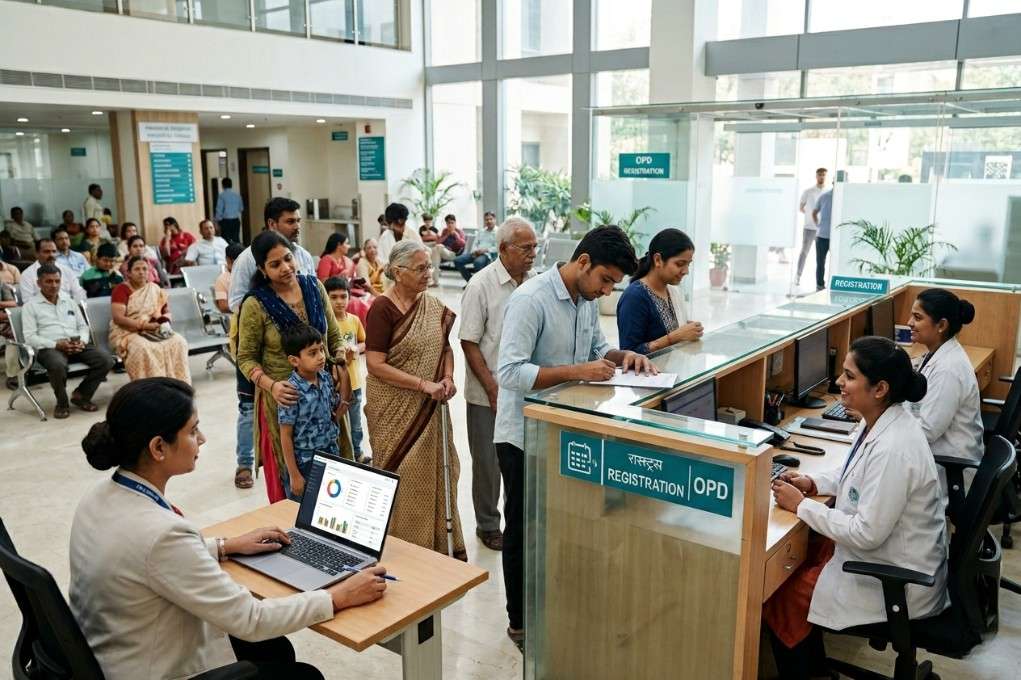
Empty OPD slots represent more than lost revenue — they represent patients who needed care and chose a competitor instead. For private hospitals and clinics across India, inconsistent footfall is one of the most pressing operational challenges, and traditional marketing methods alone are no longer sufficient to address it. This is precisely where Google Ads for hospitals India becomes a transformative tool when executed with the right strategy.
Unlike organic SEO, which builds visibility over months, Google Search Ads place your hospital directly in front of patients at the exact moment they are searching for the care you provide. A patient in Chennai searching “orthopaedic surgeon for knee pain” at 9 PM on a Tuesday is not browsing casually — they are looking for a provider to call the next morning. A well-structured Google Ads campaign ensures your hospital is the answer they find.
This article walks hospital administrators, clinic owners, and healthcare managers through a practical, compliance-aware framework for running Google Ads campaigns that consistently drive OPD appointments — covering campaign structure, ad copy best practices, landing page requirements, budget management, and the specific considerations that make healthcare PPC different from any other industry.
Why Paid Search Is a Critical Channel for Indian Hospitals in 2026
India’s digital advertising landscape has matured rapidly. With over 700 million smartphone users and increasing internet penetration across Tamil Nadu’s Tier 2 and Tier 3 cities, patients are searching for healthcare providers online in volumes that simply did not exist five years ago. The challenge for private hospitals is that this search traffic is intensely competitive.
Corporate hospital chains — Apollo, Fortis, MIOT, and others — are running sophisticated, well-funded Google Ads campaigns across major Indian cities, occupying premium positions for the most valuable healthcare search terms. Independent hospitals and specialty clinics that rely solely on organic search or word-of-mouth find themselves increasingly displaced from the first page of Google results where patient decisions are made.
Paid search levels this playing field — but only when managed strategically. A poorly structured hospital PPC campaign wastes budget rapidly, attracts irrelevant clicks, and fails to convert searchers into appointments. A well-built campaign, by contrast, delivers a measurable, optimizable return on every rupee spent.
There is also the compliance dimension that distinguishes healthcare PPC from advertising in other sectors. Google’s own policies restrict certain categories of health-related advertising, and India’s Medical Council guidelines require that all hospital advertising remain factual and free from misleading claims about treatment outcomes. Healthcare PPC campaigns must be built with these constraints embedded from the start — not retrofitted as an afterthought.
A Practical Framework for Running Google Ads That Fill Your OPD
Step 1: Define Campaign Objectives Around Appointment Conversions
The most common mistake hospitals make with Google Ads is measuring success by clicks or impressions rather than actual appointment inquiries. Before launching any campaign, define your conversion actions clearly:
- Phone calls from the ad or landing page
- Appointment booking form submissions
- WhatsApp inquiry initiations
- Direction requests to your facility
Every campaign decision — keyword selection, bidding strategy, ad copy, landing page design — should be made in service of driving these specific conversion actions, not generic website traffic.
Step 2: Build Specialty-Specific Campaign Structure
A single campaign promoting your hospital broadly will consistently underperform compared to a structure where each clinical specialty has its own dedicated campaign, ad groups, and landing page. This matters because patient search intent is highly specific.
A patient searching “best neurologist in Chennai” and a patient searching “affordable dialysis centre Tamil Nadu” have entirely different needs, concerns, and decision criteria. Treating them with the same ad and landing page produces poor results for both.
An effective hospital Google Ads structure typically includes:
- Separate campaigns for each major specialty — cardiology, orthopaedics, gynaecology, paediatrics, oncology, and so on
- Ad groups within each campaign targeting tightly related keyword clusters
- Match types balanced between exact and phrase match to control traffic quality
- Negative keyword lists filtering out irrelevant searches such as medical jobs, research queries, or competitor brand names
Step 3: Write Ad Copy That Builds Trust, Not Just Clicks
Healthcare ad copy must do something that advertising in most other industries does not need to prioritize as heavily — it must immediately establish trust. A patient clicking on a hospital ad is considering something personal and often anxiety-inducing. Ad copy that feels generic, exaggerated, or promotional will be scrolled past.
Effective hospital Google Ads copy in the Indian context:
- Leads with the specific specialty or condition, not the hospital name
- Includes a clear, factual differentiator such as years of experience, accreditation, or specialist availability
- Uses call extensions prominently so patients can call directly from the search results page without clicking through
- Includes location specifics — “Chennai,” “Velachery,” “Anna Nagar” — to reinforce local relevance
- Avoids superlatives, guaranteed outcome language, or claims that conflict with MCI advertising guidelines
Critically, ad copy must not promise specific medical results. Phrases such as “guaranteed cure” or “100% success rate” are both ethically inappropriate and likely to attract scrutiny from regulatory bodies. The goal is to communicate quality, accessibility, and specialization — not to make clinical promises.
Step 4: Build Dedicated Landing Pages for Each Specialty
Sending all Google Ads traffic to your hospital’s homepage is one of the most common and costly errors in healthcare PPC. A patient who clicked on an ad for a “spine specialist in Chennai” and arrives at a generic hospital homepage with no clear path to that department will leave within seconds.
Each specialty campaign requires its own dedicated landing page built around a single conversion goal. High-performing hospital PPC landing pages include:
- A clear headline matching the patient’s search intent
- Consultant or department credentials visible above the fold
- Appointment booking form or prominent call-to-action button accessible immediately
- Trust signals including accreditations, patient testimonials with consent, and doctor qualifications
- Mobile-optimized design with fast load speed — critical given India’s varied mobile network conditions
- No navigation menu or external links that distract from the booking action
Step 5: Set and Manage Budgets With Conversion Data, Not Guesswork
Healthcare PPC budgets in India vary significantly by specialty and geography. Highly competitive search terms in Chennai for specialties like oncology or cardiac surgery carry higher cost-per-click than general medicine or paediatrics in smaller cities. Starting with realistic expectations and scaling based on conversion data is essential.
Recommended budget management practices include:
- Beginning with a test budget for four to six weeks to establish baseline conversion rates before committing larger spend
- Using Google’s Target CPA (Cost Per Acquisition) bidding strategy once sufficient conversion data is accumulated — typically after 30 or more conversions
- Scheduling ads during periods of highest appointment intent, typically morning hours when patients are planning their day
- Reviewing search term reports weekly to identify irrelevant queries consuming budget and adding them to negative keyword lists
- Allocating higher budgets to the specialties with the strongest business case — higher procedure value, lower competition, or greater patient demand
Step 6: Track Every Conversion and Report on Real Outcomes
Google Ads campaign success in healthcare must be reported in terms that hospital administrators understand — not marketing metrics like click-through rate or quality score in isolation, but business outcomes.
Key KPIs to track and report monthly:
- Total appointment inquiries generated by campaign and specialty
- Cost per appointment inquiry by channel
- Call conversion rate from ads
- Inquiry-to-confirmed-appointment conversion rate
- Total ad spend versus estimated patient revenue generated
This level of reporting requires proper conversion tracking setup in Google Ads and Google Analytics from day one — a step that is frequently skipped and consistently regretted.
What Hospitals Can Expect From a Well-Managed Google Ads Strategy
When Google Ads campaigns for hospitals are structured, managed, and optimized correctly, the results are both measurable and meaningful:
- Consistent daily appointment inquiries from patients actively seeking your specialties
- Faster OPD slot utilization compared to organic-only marketing approaches
- Precise control over geographic reach, allowing hospitals to target patients within specific localities across Chennai or Tamil Nadu
- Scalable investment — budgets can be increased or decreased based on seasonal demand, specialty capacity, or business priorities
- Complementary performance alongside organic SEO, with paid campaigns delivering immediate results while organic authority builds over time
For hospitals launching a new specialty department or entering a new geographic market, Google Ads provides an especially valuable mechanism for generating patient volume quickly while longer-term marketing assets are being developed.
How Redwud Creations Manages Healthcare PPC for Tamil Nadu Hospitals
Redwud Creations brings two decades of healthcare marketing expertise to every Google Ads engagement. As a Chennai-based agency working exclusively in the healthcare sector, the team understands both the technical requirements of effective PPC campaign management and the ethical framework within which all hospital advertising must operate in India.
The agency’s PPC service for hospitals begins with a detailed audit of the client’s current digital presence, specialty priorities, competitive landscape, and patient geography. This informs a campaign architecture designed specifically around the hospital’s clinical offerings and business objectives — not a template applied uniformly across clients.
Redwud Creations manages the complete Google Ads lifecycle: keyword research, campaign structure, ad copy development, landing page creation, conversion tracking setup, ongoing optimisation, and transparent monthly reporting that connects campaign activity to appointment outcomes. The team uses enterprise-grade tools including Google Ads Manager, Google Analytics 4, SEMrush, and call tracking platforms to ensure every aspect of campaign performance is measurable and improvable.
What differentiates Redwud Creations in healthcare PPC is its understanding of the patient decision journey specific to Indian healthcare consumers — including the role of family consultation, the influence of online reviews, and the language and cultural nuances that vary across Tamil Nadu’s diverse patient demographics. Campaigns are built with this intelligence embedded, not added superficially.
Conclusion
An empty OPD is a problem with a solution — and Google Ads, when managed by a team that understands both digital marketing and healthcare, is one of the most direct and measurable solutions available to private hospitals and clinics in India today.
The framework outlined in this article — from campaign structure and ad copy standards to landing page design and conversion tracking — provides a foundation for campaigns that generate real appointment volume without compromising on the ethical standards that patient trust requires.
If your hospital or clinic is ready to move from inconsistent footfall to predictable, measurable patient appointments, Redwud Creations is ready to build that strategy with you. Contact the team today for a complimentary PPC audit and discover what a properly structured Google Ads campaign can deliver for your OPD.