
Introduction
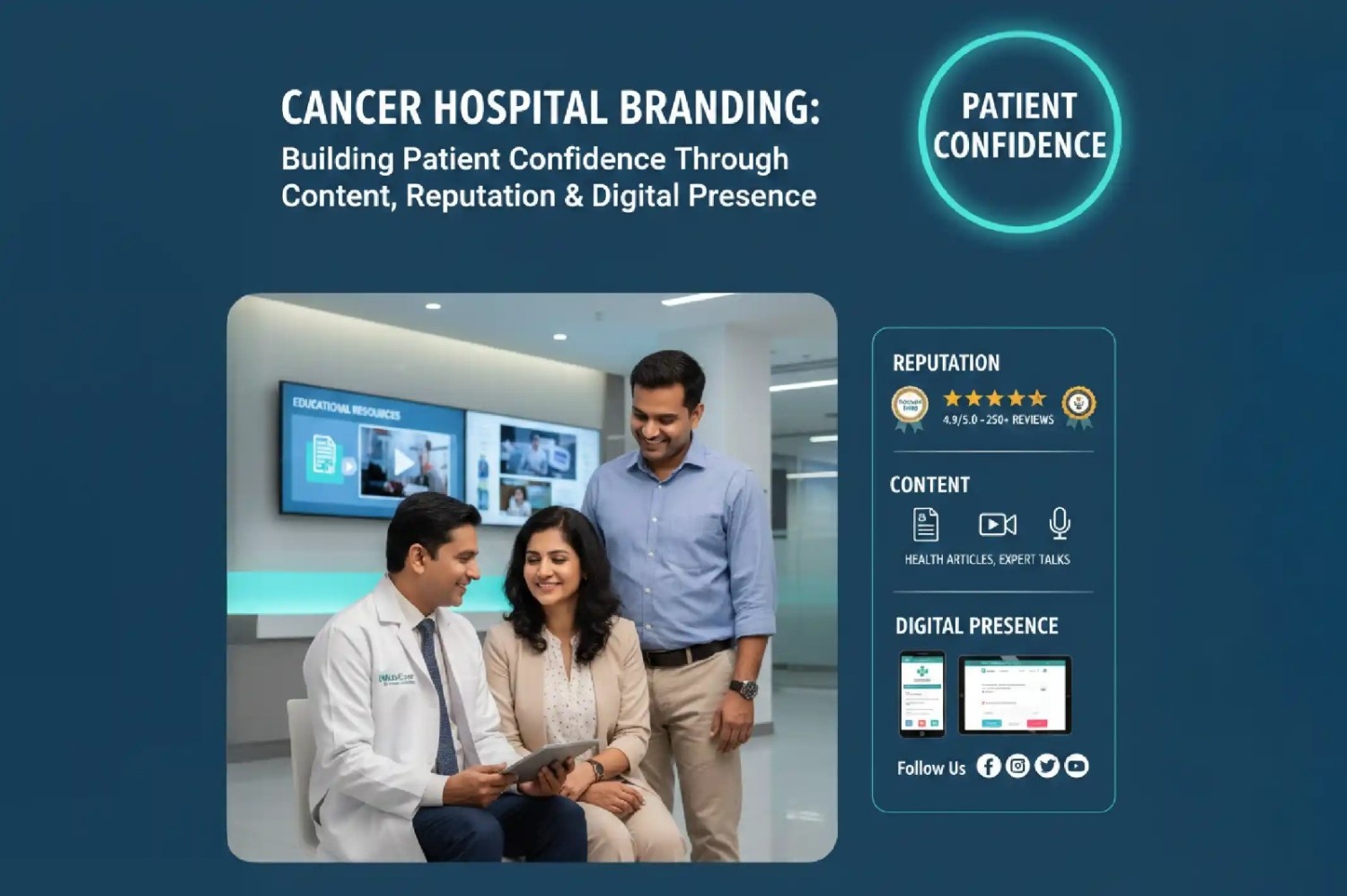
Cancer diagnosis triggers the most critical healthcare decision patients and families will ever make: where to entrust their treatment, survival hopes, and quality of life. Yet cancer hospital administrators across Chennai discover that clinical excellence alone doesn’t translate to patient selection—the battle for patient confidence happens online, long before families enter consultation rooms. A comprehensive cancer hospital marketing strategy must address the fundamental challenge facing oncology centers: how to communicate treatment capabilities, physician expertise, and patient support systems in ways that build trust during patients’ most vulnerable moments. As Tamil Nadu’s oncology sector expands—with over 85 cancer treatment centers now operating across the state—the imperative for strategic oncology center branding intensifies. This guide reveals how cancer hospitals can construct digital presence, reputation architecture, and content ecosystems that earn patient confidence ethically while navigating the unique sensitivities that cancer care marketing demands in India’s evolving healthcare landscape.
The Cancer Hospital Trust Deficit Challenge
Cancer treatment decisions differ fundamentally from other healthcare choices. Patients aren’t comparing convenience or cost primarily—they’re evaluating survival probability, treatment side effect management, and institutional capacity to handle complications. This high-stakes decision environment creates unique cancer care digital marketing challenges that generic healthcare marketing approaches cannot address.
Research on Indian cancer patient behavior reveals striking patterns. Approximately 67% of cancer patients consult three or more hospitals before selecting their treatment center. The average decision timeline spans 3-6 weeks from diagnosis to treatment initiation, during which families conduct intensive online research, seek multiple medical opinions, and evaluate hospital reputations through digital channels. During this critical window, your hospital’s digital presence either builds confidence or raises doubts.
Chennai’s oncology landscape intensifies these dynamics. As a regional cancer treatment hub serving patients from across South India and international medical tourism, Chennai hospitals compete not just locally but against Bangalore, Hyderabad, and international alternatives. Patients arriving with advanced-stage diagnoses require immediate confidence in treatment capabilities—your digital presence must communicate competence instantaneously.
The stakes extend beyond individual patient acquisition. Cancer treatment involves extended engagement cycles—chemotherapy protocols spanning months, radiation therapy requiring daily visits, surgical recoveries demanding intensive support, and survivorship care continuing years. Initial patient acquisition represents the beginning of relationships that generate substantial lifetime value through treatment completion, recurrence management, and family referrals.
However, oncology hospital patient acquisition faces ethical constraints that other specialties don’t encounter. Aggressive marketing tactics appropriate for elective procedures become exploitative when targeting cancer patients. Regulatory scrutiny remains intense—MCI guidelines specifically address cancer treatment advertising, prohibiting success rate guarantees, survival time claims, and testimonials that could mislead desperate patients. The Medical Council maintains particular vigilance over oncology advertising given the vulnerability of this patient population.
For cancer hospitals seeking sustainable growth, the challenge crystallizes: how to build patient confidence and drive treatment selection through digital channels while maintaining the ethical standards that oncology care demands and the trust-building authenticity that cancer patients require.
Strategic Framework: The Three Pillars of Cancer Hospital Brand Building
Pillar 1: Clinical Authority Content That Demonstrates Oncology Expertise
Cancer patients research their specific diagnoses obsessively. Your content strategy must position your hospital as the definitive information source for their particular cancer type, stage, and treatment considerations.
Content Architecture Strategy:
Develop comprehensive cancer type resource centers on your website. Rather than generic “services” pages, create detailed content hubs for each cancer specialty: breast oncology, gastrointestinal cancers, thoracic malignancies, gynecologic oncology, hematologic malignancies, head and neck cancers, and urologic cancers. Each hub should contain diagnosis information, staging explanations, treatment protocol overviews, side effect management guidance, and survivorship considerations.
Structure content by patient journey stage. Newly diagnosed patients need different information than those evaluating treatment options, undergoing active therapy, or managing long-term survivorship. Create content pathways that guide patients through: understanding diagnosis, evaluating treatment options, preparing for therapy, managing treatment side effects, navigating recovery, and long-term survivorship. This journey-based architecture ensures patients find precisely relevant information for their current situation.
Publish physician-authored clinical insights demonstrating specialized expertise. Every oncologist on your team should maintain active content contribution—explaining treatment decision-making for complex cases, discussing multidisciplinary tumor board approaches, or analyzing emerging treatment protocols. Bylined content with medical credentials builds the physician-specific trust that cancer patients demand when selecting treating oncologists.
Create treatment comparison content that educates rather than promotes. Publish detailed analyses comparing chemotherapy regimens, radiation therapy techniques, surgical approaches, or emerging immunotherapy options. Explain selection criteria, expected outcomes, side effect profiles, and recovery considerations. This transparency demonstrates confidence in your clinical judgment while helping patients understand treatment recommendations they’ll receive during consultations.
Implement advanced content formats that engage different learning styles. Beyond written articles, develop video explainers where oncologists discuss common questions, animated infographics explaining complex treatment mechanisms, podcast series addressing survivorship topics, and interactive tools helping patients understand their pathology reports. Multi-format content increases engagement while accommodating diverse patient preferences.
Chennai Considerations: Tamil Nadu patients often involve extended family in cancer treatment decisions. Create content addressing caregiver concerns, family communication strategies, and support system development. Consider Tamil-language content for reaching semi-urban patient populations seeking tertiary care in Chennai.
Pillar 2: Reputation Architecture Through Systematic Trust-Building
Cancer hospital selection heavily weights reputation signals—patient testimonials, physician credentials, accreditation status, and clinical outcome transparency. Strategic healthcare reputation management requires proactive trust signal construction across digital channels.
Reputation Building Framework:
Establish comprehensive physician credential documentation. Create detailed oncologist profile pages showcasing medical education, fellowship training, board certifications, clinical trial participation, research publications, professional society memberships, and specialized expertise areas. Include treatment volume data where ethically appropriate: “Dr. Sharma has performed over 850 breast cancer surgeries with comprehensive outcomes tracking.” Credential transparency directly addresses patient concerns about physician expertise.
Develop institutional credibility indicators prominently. Display NABH accreditation, NABL laboratory certification, cancer-specific program accreditations, tumor registry participation, and clinical trial sponsorship prominently. Explain what these certifications mean for treatment quality—most patients don’t inherently understand accreditation significance. Create dedicated pages detailing your quality assurance processes, multidisciplinary care approaches, and safety protocols.
Implement ethical patient testimony systems that comply with MCI guidelines. Rather than promotional testimonials, publish patient journey narratives that honestly depict treatment experiences—including challenges faced and support received. Focus testimonials on hospital support systems, care coordination, and communication quality rather than clinical outcome claims. Obtain explicit consent and ensure patients understand their stories will be public.
Create transparent outcome reporting within ethical boundaries. While avoiding misleading survival rate claims, publish aggregate quality metrics: surgical complication rates, hospital-acquired infection rates, treatment completion percentages, or patient satisfaction scores. Present data with appropriate context and medical caveats. Transparency about quality measurement demonstrates confidence in clinical performance.
Develop strategic review generation and response protocols. Cancer patients who complete treatment and achieve positive outcomes represent ideal review sources. Implement systematic but non-coercive review request processes following treatment completion. More critically, respond to every review—positive and negative—with empathy, professionalism, and specific action explanations. Your response to criticism often influences prospective patients more than the original complaint.
Build physician thought leadership through professional visibility. Facilitate speaking engagements at oncology conferences, media commentary on cancer-related news, participation in professional webinars, and contribution to medical publications. External recognition by professional peers creates authority signals that patient research discovers. When oncologists appear as expert sources in news coverage or professional forums, it dramatically enhances hospital credibility.
Digital Reputation Monitoring: Implement systematic monitoring of online mentions, review platforms, social media discussions, and patient forum conversations. Early identification of reputation concerns enables proactive response before issues amplify. Use monitoring insights to identify recurring patient concerns requiring operational or communication improvements.
Pillar 3: Digital Presence Optimization for Cancer-Specific Patient Journeys
Cancer patients conduct highly specific searches reflecting their diagnosis, treatment questions, and decision-making stage. Digital marketing for cancer treatment centers must capture these high-intent queries through technical optimization and strategic content targeting.
SEO Implementation Strategy:
Optimize for diagnosis-specific, long-tail keywords that signal treatment readiness: “stage 3 breast cancer treatment options Chennai,” “lymphoma specialists Tamil Nadu,” “robotic surgery for prostate cancer near me,” “chemotherapy side effects management,” “second opinion for pancreatic cancer treatment.” These searches indicate patients actively evaluating treatment centers rather than seeking general information.
Implement comprehensive local SEO for Chennai and regional visibility. Optimize Google Business Profile with complete oncology specialties, treatment modalities offered, physician credentials, virtual tour integration, and appointment booking functionality. Cancer patients heavily weight proximity and accessibility—local search optimization captures patients evaluating nearby treatment options.
Create location-specific content addressing regional patient access considerations. Publish information about patient accommodation assistance for families traveling to Chennai, transportation coordination for daily radiation therapy, telemedicine follow-up options for distant patients, and regional language interpretation services. These practical considerations significantly influence treatment center selection for patients outside Chennai metropolitan area.
Develop cancer journey-specific landing pages optimized for different search intents. Create separate pages targeting “newly diagnosed [cancer type],” “second opinion for [cancer type],” “advanced stage [cancer type] treatment,” “cancer recurrence treatment,” and “clinical trial opportunities for [cancer type].” Each landing page should address the specific concerns and questions relevant to that patient situation.
Implement FAQ schema markup addressing common cancer patient questions. Structure content to answer: “What are the success rates for [treatment]?” “How long does [therapy] take?” “What are the side effects of [treatment]?” “Do you accept insurance for cancer treatment?” “Can I get a second opinion?” Featured snippet optimization increases visibility for these critical patient queries.
Build authoritative backlink profiles through strategic partnerships. Develop relationships with cancer patient advocacy organizations, support groups, survivorship communities, and medical information websites. Contribute expert content, sponsor educational initiatives, or provide resources that earn natural backlinks from authoritative healthcare sources.
Measurement and Optimization:
Track cancer-specific patient journey metrics: diagnosis-to-inquiry timeline, consultation-to-treatment conversion rates, treatment completion percentages, patient satisfaction scores by cancer type, and source attribution for patient acquisition. These specialized metrics provide insight beyond generic website analytics, revealing how effectively your digital presence serves cancer patients’ unique needs.
Monitor search visibility for priority cancer types and treatments. Analyze ranking positions for key queries, content engagement rates, and conversion patterns by cancer specialty. This data guides content investment priorities and identifies opportunity gaps where competing hospitals may be capturing patient attention.
Benefits for Cancer Hospitals
Comprehensive cancer hospital marketing strategy implementation delivers measurable outcomes extending beyond patient volume growth. Oncology centers executing these frameworks report 45-65% improvements in qualified patient inquiry rates, as better-informed prospects arrive with realistic treatment expectations and higher treatment initiation likelihood.
Patient acquisition costs decrease substantially despite increased marketing sophistication. Educational content and reputation building generate organic visibility that reduces paid advertising dependency. Chennai cancer hospitals with established digital authority report 70-80% of new patient inquiries originating from organic search, professional referrals, and patient recommendations rather than paid channels.
Treatment completion rates improve when marketing accurately represents treatment journeys. Patients prepared for therapy duration, side effect management requirements, and support system needs demonstrate higher protocol adherence and completion rates. Realistic expectation setting prevents premature treatment discontinuation driven by surprise at treatment realities.
Patient satisfaction scores increase when digital presence accurately reflects actual hospital capabilities and care quality. The alignment between marketing promises and treatment experiences reduces disappointment-driven complaints while building trust that generates positive reviews and referrals.
Physician recruitment becomes easier when your hospital maintains strong digital presence and reputation. Oncologists evaluating practice opportunities research institutional reputations—strong digital brands attract top clinical talent seeking prestigious affiliations.
Long-term competitive positioning strengthens as digital authority accumulates. Unlike paid advertising requiring continuous investment, content libraries and reputation assets provide compounding returns. The hospital recognized as the regional authority on specific cancer types captures disproportionate market share within those specialties.
Redwud Creations' Oncology Marketing Expertise
At Redwud Creations, we’ve developed specialized oncology center branding frameworks calibrated specifically for cancer hospital marketing’s unique ethical and strategic requirements. Our healthcare marketing team understands the sensitivity cancer treatment demands while delivering patient acquisition results that justify marketing investments.
Our Specialized Methodology:
We begin with comprehensive digital presence audits evaluating your current cancer hospital branding across all touchpoints—website content, physician profiles, review platforms, search visibility, social media presence, and competitive positioning. This assessment identifies authority gaps, reputation vulnerabilities, and opportunity areas where strategic investment generates maximum patient confidence impact.
Our content strategy development creates cancer-specific resource architectures that position your hospital as the definitive information source for target cancer types. We don’t produce generic medical content—we develop physician-partnered educational resources that demonstrate genuine oncology expertise while naturally guiding patients toward consultation requests.
Technical implementation encompasses complete website optimization for cancer-specific searches, local SEO enhancement for Chennai and Tamil Nadu visibility, conversion funnel development prioritizing informed patient decisions, and reputation management infrastructure enabling systematic trust-building. We build systems that attract treatment-ready cancer patients rather than tire-kickers requiring extensive cultivation.
Reputation management systems we implement proactively generate ethical patient testimonials, systematically monitor online mentions, enable responsive review management, and build physician thought leadership through professional visibility programs. Our approach treats online reputation as reflection of actual patient experience quality, not marketing manipulation exercise.
Our Chennai location provides critical advantages for Tamil Nadu cancer hospitals. We understand regional patient behavior patterns, cultural communication preferences impacting cancer treatment discussions, medical tourism dynamics affecting international patient acquisition, and competitive landscape specifics within South India’s oncology sector. We maintain relationships with local medical communities, professional organizations, and patient advocacy groups that generic agencies cannot access.
Success measurement combines patient acquisition metrics with quality indicators reflecting cancer patient journey specifics. We track organic visibility for priority cancer types, measure consultation booking rates, analyze treatment conversion percentages, monitor patient satisfaction by service line, evaluate referral source attribution, and calculate marketing ROI through comprehensive analytics integration following complete patient journeys from initial search to treatment completion.
Conclusion & Strategic Call-to-Action
Cancer hospital branding represents one of healthcare marketing’s most challenging yet rewarding specializations. The unique combination of high patient vulnerability, complex treatment decisions, extended engagement cycles, and strict ethical constraints requires sophisticated cancer care digital marketing approaches that balance patient acquisition imperatives with the sensitivity cancer treatment demands.
Chennai’s oncology market will increasingly reward hospitals that invest in systematic brand building, reputation architecture, and educational content ecosystems. As cancer patients conduct more extensive online research before selecting treatment centers, digital presence quality directly correlates with patient confidence and ultimately treatment center selection.
The cancer hospitals dominating Tamil Nadu’s oncology landscape over the coming decade won’t necessarily be those with the largest facilities or most advanced equipment—they’ll be those that most effectively communicate clinical expertise, build patient trust through transparent digital presence, and demonstrate genuine commitment to patient-centered care through every digital interaction.
Begin Your Cancer Hospital Brand Transformation:
Evaluate your current digital presence honestly against the three-pillar framework outlined above. Assess where clinical authority content could be strengthened, identify reputation gaps requiring attention, and determine whether your digital optimization captures cancer-specific patient searches effectively. Even incremental improvements in one pillar generate measurable patient confidence impact.
Partner with specialists who understand both oncology marketing’s unique requirements and broader healthcare digital marketing best practices. Redwud Creations offers comprehensive cancer hospital marketing audits for Chennai healthcare organizations ready to build systematic brand architecture aligned with both patient acquisition goals and ethical oncology care standards.
Contact Redwud Creations for a confidential oncology marketing strategy consultation. Let’s discuss how strategic brand building can differentiate your cancer hospital, build patient confidence during their most critical treatment decisions, and drive sustainable growth through digital presence that reflects your clinical excellence. Your oncology team’s expertise deserves digital visibility that matches it—we provide the specialized frameworks to achieve this alignment while maintaining the ethical standards cancer care demands.